+ RESEARCH INTO PRACTICE
The thinking behind
the examination record.
Research questions, practical distinctions and the decisions that shape PROFAS. Explore why we preserve the work behind a conclusion.
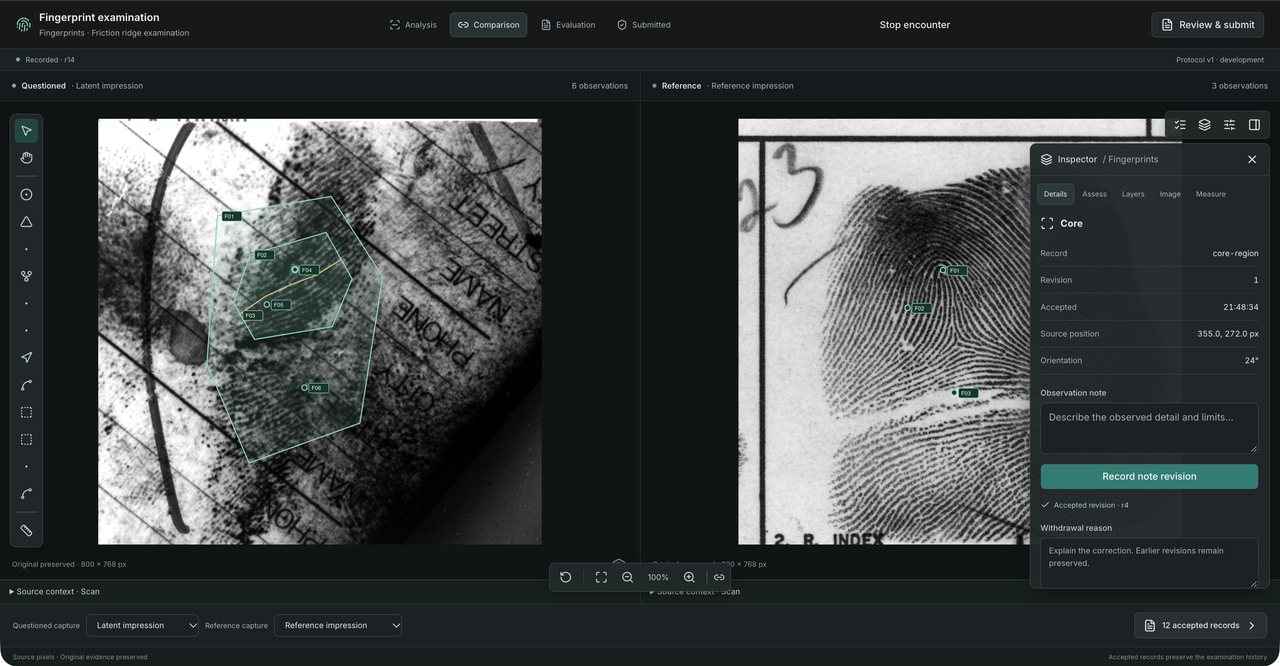
The examination record
The same conclusion can conceal a different examination
Why feature agreement, documentation completeness and final opinions need to be studied separately—and how that research shaped PROFAS.
Read the article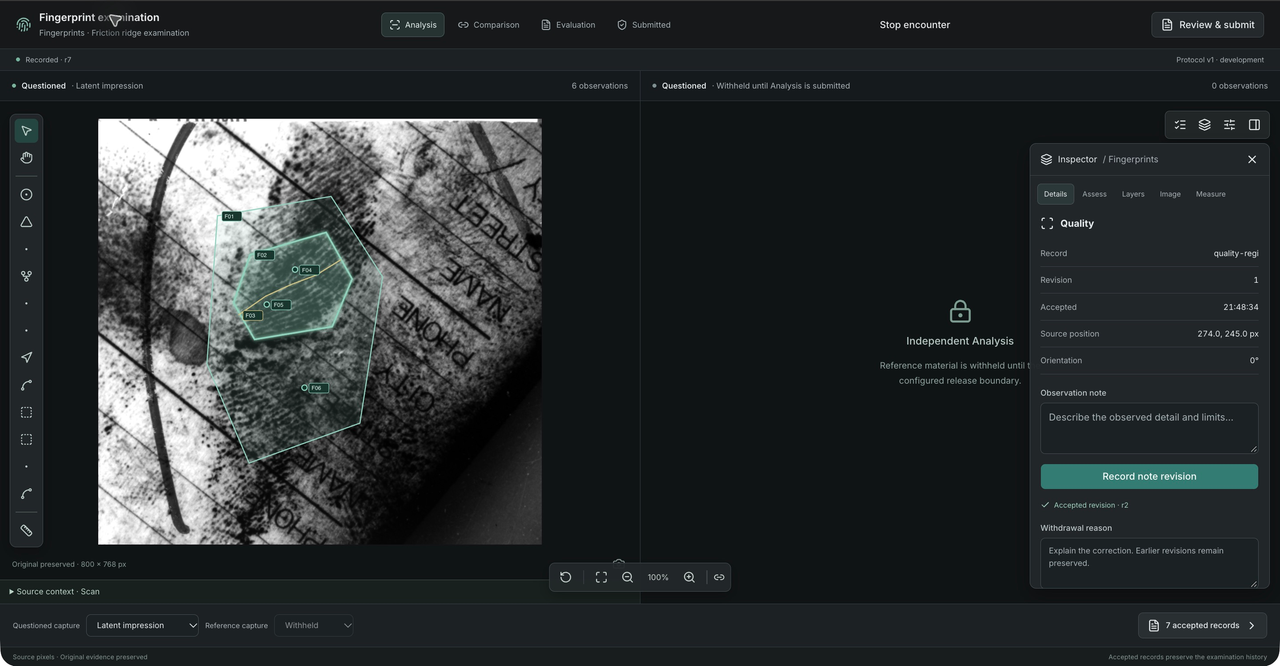
Observation and sequence
When did the examiner first see that feature?
Why observations before reference exposure and contributions made during comparison need distinct records, and what their sequence can tell researchers.
Read the article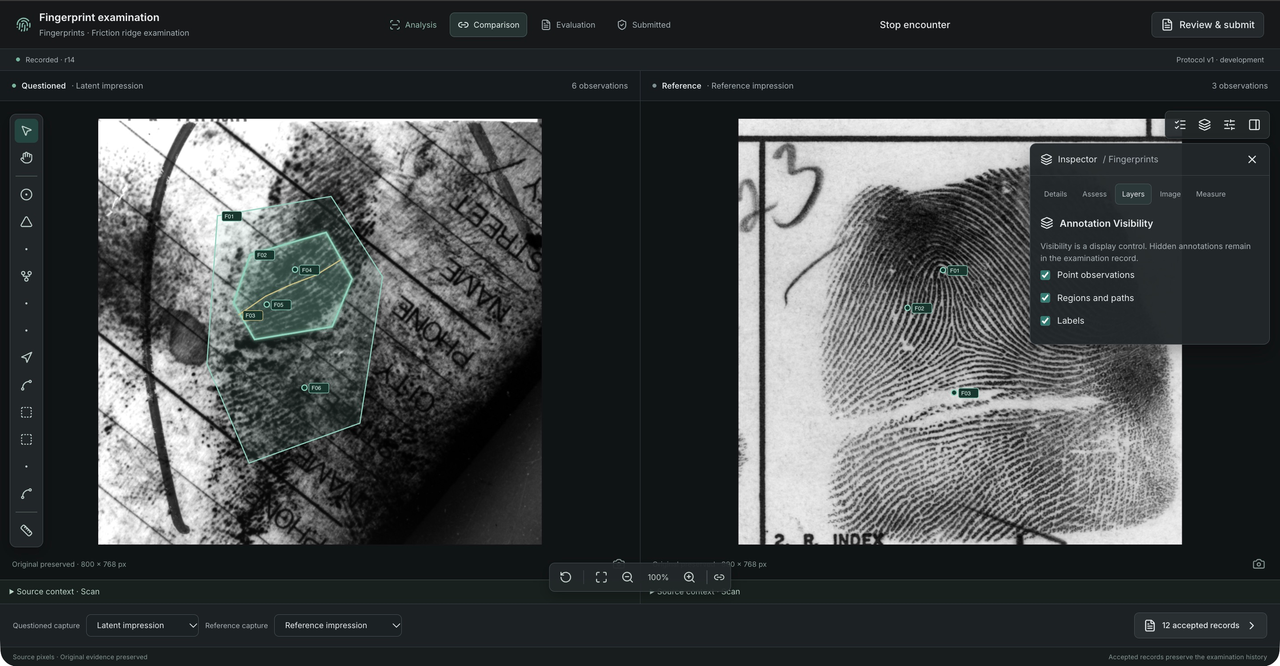
Quality and uncertainty
Recording uncertainty without losing its meaning
How quality, feature confidence, correspondence and an examiner’s opinion describe different questions, and why the record should preserve those distinctions.
Read the articleVerification and information
What makes verification independent?
Why a verifier’s initial examination, access to a colleague’s findings and subsequent review need distinct records.
Read the articleCommentary and reasoning
What a spoken examination record can reveal
How commentary can preserve explanation alongside visual observations, and why original audio, machine text and accepted wording need distinct roles.
Read the article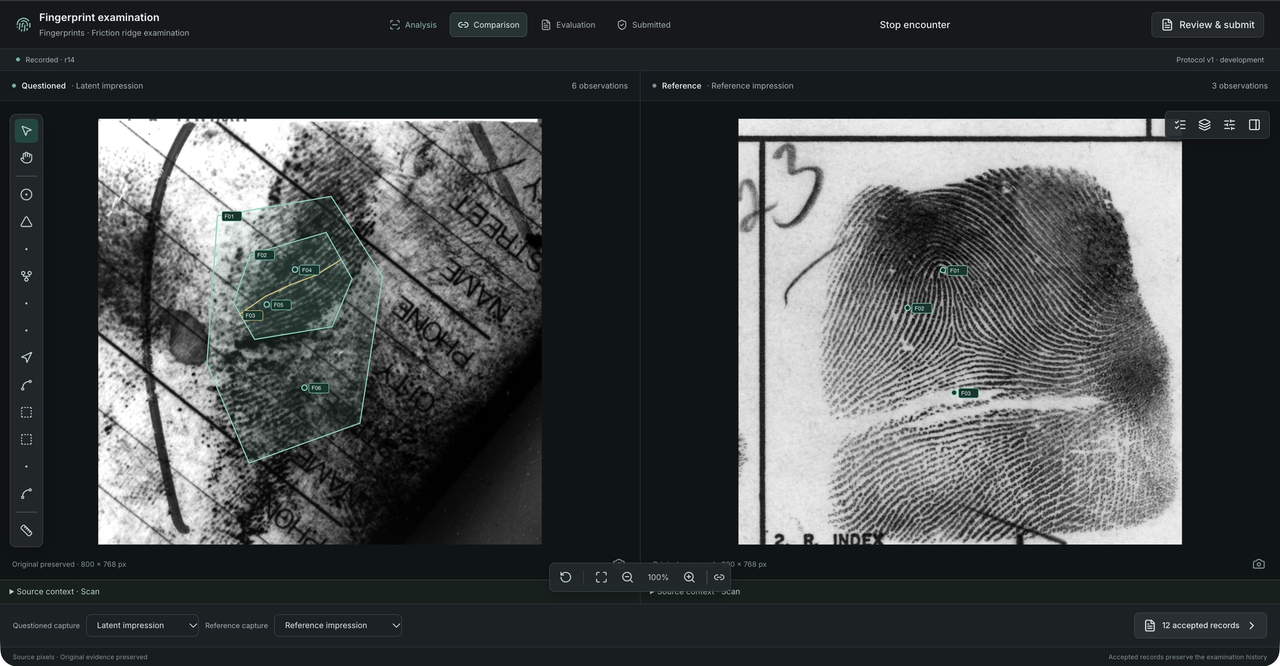
Research design
Agreement needs a denominator
Why assessments per item, decision categories, repeated encounters and missing work matter when studying examiner agreement.
Read the articleEducation and experience
Building experience through sustained forensic practice
How independent attempts, specific feedback and unfamiliar material could support a sustained programme of forensic learning.
Read the article
Source, interpretation and review
From source material to an inspectable conclusion
Why source identity, interpretation, evaluation and exact review basis belong together in a useful forensic examination record.
Read the article